Coffee Machines
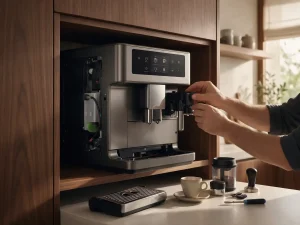
Built-in coffee machines combine water, heat, grinding and brewing in a cabinet, and most problems trace to one stage of that sequence.
In-home Bertazzoni repair across the San Francisco Bay AreaMon–Sat 8 AM – 7 PM
When your Bertazzoni coffee machine grinds but will not brew, or brews something lukewarm, we trace the drink cycle to the exact point where it stalls.
Repair service · Coffee Machine
Pressing a button on a built-in coffee machine sets off a quick chain of events. Water is drawn from the tank or line, beans are ground, a brew unit presses and releases, a heater lifts the water to temperature, and the machine rinses afterward. If any link goes wrong, the cup tells you something different.
That is why we ask you to describe the cup, not just the failure. Thin, bitter, cool, late or absent: each word narrows the field.
If the machine fills but never grinds, the bean path is suspect. If it grinds but nothing comes out, we look at the brew unit and the water route. Cool coffee suggests heating or temperature sensing, and a message about descaling suggests the machine is tracking mineral buildup. The first sound you hear, or the lack of it, helps place where the cycle stops.
Hard water is the quiet culprit in many cases. Scale narrows tubing, clings to the heating element and confuses sensors. A machine that is descaled on schedule often sails along for a long time, while one that is never descaled can develop several unrelated symptoms at once. We ask about your water and your routine so we are not chasing scale-related faults with replacement parts. A water filter, where one is fitted, is replaced as the manual says and does not take the place of descaling.
Most breakdowns we see start with something ordinary. Oily or flavored beans can clog a grinder, an old tank of water breeds odor, and a full grounds container leads to an error that looks worse than it is. People who brew a few cups every morning have different wear from those who run it all day for guests.
We ask about the beans you use, how often you empty the grounds and how long water sits in the tank. These facts rarely appear on any label, yet they often explain why two identical machines behave differently. The grinder and the brew unit are separate parts: a jammed grinder keeps beans from reaching the unit, while a brew unit problem shows up after the grounds are dosed.
Because the machine sits inside cabinetry, a small leak can go unnoticed for weeks. Look under the unit for damp wood, and check whether the drip tray has overflowed. Where leaks do start, a loose hose seat or a cracked tank is common, but a blocked drain from the brew unit can also push water out the wrong way. We trace the route from tank to cup to waste container. A leak that appears only during brewing points toward the water path to the brew unit, while one that appears at rest points toward the tank or its seat.
Machines near the coast live with damp air that can dull electrical contacts and speed up corrosion on metal parts. Inland, hot afternoons raise cabinet temperature and make heating components work harder. Neither is a defect, yet both are worth knowing when a machine begins to misbehave.
Leave the brew unit, hoses and any internal panels alone. Do not force a stuck component, and do not use a descaler the manual does not name.
Unplug or switch off at the breaker if water reaches the cabinet near electrical connections, if you smell burning or if the machine trips a breaker. A drip that returns after every cup should also get a visit before the cabinet floor swells.
Built-in coffee systems differ in brew units, grinders and control software. The label is typically in a service area you can reach by sliding the unit or removing a container, and the user guide shows exactly where. Our Bertazzoni Coffee Machines page describes the usual locations. If a message keeps returning, the Bertazzoni Coffee E03 Error Code page may match what you see. Two machines that look alike can use different brew units, so the label decides which descaling and cleaning procedure applies.
You then receive a written estimate. After approved work, we confirm the rinse and brew cycles so you can taste the result yourself. Nothing is replaced without your approval.
The cause can be scale, a heating fault or a temperature sensor reading. Descaling by the manual is a safe first step.
Use only the one your user guide names. Other products can harm seals and sensors.
A photo of the message and the model label is helpful and speeds up preparation.
Built-in coffee machines combine water, heat, grinding and brewing in a cabinet, and most problems trace to one stage of that sequence.
E01 usually appears when water is not moving or heating the way the machine expects, and scale is a frequent suspect in hard-water homes.
E02 is a heating-related code. Owners often notice lukewarm coffee, a long wait after switching on, or a machine that stops before the cup is full.
E03 points at temperature sensing rather than heating itself. It often shows when the machine switches from steaming milk back to brewing.
E04 is a water-intake code. It tends to follow a tank refill, a new filter cartridge, or a machine moved to a different spot on the counter.
E05 on a coffee machine ties to heating or temperature sensing. It is often seen on the first start after a power cut or a long idle spell.
E06 is a sensor-related code. It tends to appear after the machine has been wiped down, shifted on the counter, or exposed to splashes near the controls.
Whether one zone misbehaves or the whole surface is dead decides almost everything about a cooktop repair, so we begin right there.
Cloudy glasses, a puddle at the base or a cycle that dies halfway are different failures, and we sort them by the…
Uneven browning, a slow preheat or a door that stays locked each point to a different part of the oven, and each…
A freestanding range packs burners and an oven into one body, so a fault in one half can look like a fault…
Share a few details and we’ll confirm an appointment. Prefer to talk? Call us and we’ll help right away.