Coffee Machine Repair
A built-in coffee machine goes through water, grind, heat and brew in a few seconds, and the stage where it stops points…
In-home Bertazzoni repair across the San Francisco Bay AreaMon–Sat 8 AM – 7 PM
This page describes Bertazzoni built-in coffee machines for owners: what they do, what commonly goes wrong, how to find the label and what to read next.
Appliance line · Coffee Machine
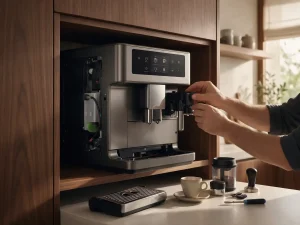
A built-in coffee machine from Bertazzoni sits within cabinetry and handles every step between beans and cup. It draws water from a tank, grinds beans, moves a brew unit, heats water in a thermoblock and flushes the system afterward. Because the whole process fits in a few seconds, a fault in one place can look like a failure of the whole machine. A grinder problem, for example, can end the cycle before any water has been heated.
The user guide describes how to remove and clean each of those. Anything deeper belongs to a technician. The brew unit is the mechanism that presses the grounds, and it stays a technician part unless your manual says otherwise.
Write down the stage where the cycle stopped when you read these pages. The code points to an area, and the stage helps narrow it. A code at the grinding stage and the same code at the heating stage can lead to different tests.
The rating label sits in a service area, often behind the water tank or inside the compartment you open to empty the grounds. The user guide shows the exact place for your unit. If the machine is wedged tightly between cabinets, do not pull it out; take a picture of the visible label or use the paperwork that came with it.
Machines that last are those that get fresh water daily, a regular descale with the product the manual names, and a grounds container emptied before it overflows. Skipping those habits does not cause failure overnight, but it builds up. Scale is the mineral deposit left by hard water, and it narrows the heating path gradually. If your kitchen sees hard water or a morning rush of several cups, these habits matter even more.
The beans you buy matter. Very oily roasts coat the grinder and hopper, and flavored beans leave residue. Water matters just as much, since scale gathers in the heating path wherever the water is hard. Using the maintenance routine described in your manual keeps both under control.
Many problems show up in the first seconds after you press the button. A grinder that races without sound of beans, a pump that hums without producing water or a tray that fills with water instead of coffee are all useful details. Tell us what you heard and in what order. A pump that hums without delivering water points toward the water path, which differs from a grinder fault.
A machine built into a tall cabinet needs the clearances shown in its installation guide. Too snug a fit traps warmth, and a blocked rear vent makes the heating parts run longer than they should. If a remodel changed the cabinet, check that nothing now presses on the machine or its water line. A water line that is kinked or pinched can look like an empty tank.
It also helps to keep the area around the drip tray dry, since spilled coffee dries sticky and can reach connectors beneath.
Machines in damp coastal kitchens collect moisture on their rear connections. Those in sunny rooms can suffer from heat in an enclosed niche. Moving a machine slightly can change airflow, so check clearances against the installation guide.
Complete only the maintenance routines your manual allows, then stop. When you want a technician, read Bertazzoni Coffee Machine Repair, and send the model number, message and the stage of failure through the contact page.
The water tank, bean hopper, grounds container and drip tray, as your user guide describes.
Usually in a service area such as behind the tank or inside the grounds compartment. Check your guide.
No. A maintenance or scale alert may simply mean it is time for the descaling routine.
A built-in coffee machine goes through water, grind, heat and brew in a few seconds, and the stage where it stops points…
E01 usually appears when water is not moving or heating the way the machine expects, and scale is a frequent suspect in hard-water homes.
E02 is a heating-related code. Owners often notice lukewarm coffee, a long wait after switching on, or a machine that stops before the cup is full.
E03 points at temperature sensing rather than heating itself. It often shows when the machine switches from steaming milk back to brewing.
E04 is a water-intake code. It tends to follow a tank refill, a new filter cartridge, or a machine moved to a different spot on the counter.
E05 on a coffee machine ties to heating or temperature sensing. It is often seen on the first start after a power cut or a long idle spell.
E06 is a sensor-related code. It tends to appear after the machine has been wiped down, shifted on the counter, or exposed to splashes near the controls.
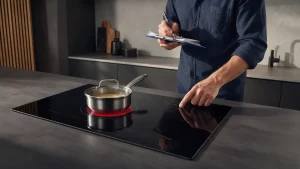
Gas and induction cooktops from Bertazzoni fail in different ways, so the type on your counter shapes how a fault gets described.
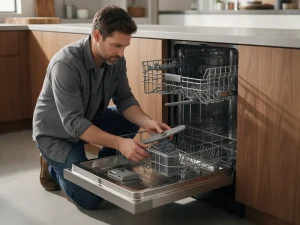
Integrated stainless dishwashers from Bertazzoni share handle kits across design lines, so the model label matters more than the front.
Built-in Bertazzoni ovens come as single and double units across three series, and knowing yours helps when something stops heating evenly.
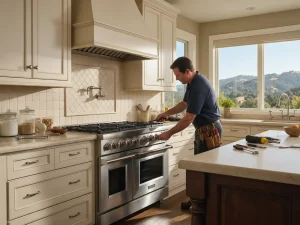
Bertazzoni freestanding ranges combine burners and an oven in one body, and the fuel type decides how each half is serviced.
Share a few details and we’ll confirm an appointment. Prefer to talk? Call us and we’ll help right away.