


In-home Bertazzoni repair across the San Francisco Bay AreaMon–Sat 8 AM – 7 PM
Two machines that look the same can use different brew units inside. Find out why model and generation matter and how to decide between repair and replacement.
Repair guide
The brew unit is the mechanism that takes ground coffee, compresses it, passes hot water through it and then ejects the used puck. It moves often and sees heat, moisture and oils. Because manufacturers refine these mechanisms over time, the unit inside a recent machine is not necessarily the same as the one inside an earlier machine that looks identical from the front. In practice that makes the brew unit a likely suspect for several symptoms, though rarely the only one worth checking.
In a typical bean-to-cup machine, the brew unit receives a dose of grounds, presses them into a compact cake, receives pressurized hot water and then opens to discard the puck into a waste container. A motor, gears and position sensors coordinate those steps. Seals keep the water where it belongs. The position sensors report whether the unit is open, closed or part-way, so a unit that cannot reach its expected position can trigger that message even when it looks intact.
When any stage hesitates, you may see an error on the display, a pause during brewing, coffee that arrives watery or a wet puck that falls apart. See Bertazzoni coffee brew unit stalls for what a stalled stage looks like in daily use.
Without assuming any specific model, the usual changes include different motor and gear arrangements, revised seals, new ways of removing the unit for cleaning, updated sensors for position and updated electronics that control timing. Some generations let owners remove the unit for rinsing, while others keep it fixed and rely on automated cleaning. Whether a unit is removable also changes what the owner can safely do, which is another reason the manual for your exact machine comes first.
These differences are why parts are not interchangeable across the board. A seal kit or a motor assembly fits a particular design, and fitting the wrong one produces leaks or jams.
The full model number on the machine’s label ties it to a specific design. It is the key to the correct service reference, the correct parts and the correct cleaning procedure. Look in the owner manual to find where the label is shown. For related guidance on finding labels, see Model Label Locations Differ by Oven Configuration, which applies a similar principle to ovens.
When you contact us, send the full model number, a photo of the label, the symptom and any code. A generic request such as “brew unit broken” is hard to act on without the generation.
These complaints may relate to the brew unit, though other causes are possible.
Grinder wear, pump pressure and blocked water paths can imitate some of these, so a diagnosis should confirm the cause.
Follow your manual for any removable brew unit. If it can be taken out, rinse it under lukewarm water as directed, let it dry and replace it gently until it seats. Do not use dish soap unless the manual says so, and do not force it in. Clear coffee grounds from the compartment with a soft brush while the machine is off and cool. The drip tray and waste container are removable parts the manual also covers, and cleaning them removes one variable before the brew unit is blamed.
If the unit is not user-removable, do not try to access it. Run the cleaning program and leave the rest to a technician, since hot water, moving parts and electrical components are close together.
A technician learns a lot from a good description. Does the sound come before water flows, or during? Is it a steady grind, a rhythmic click or a groan that rises and falls? Record a short video with your phone from a normal standing position, and note the cup size and drink type. Sound recordings help identify whether the grinder, the brew unit motor or the pump is involved, and they travel well in an email. Say whether it happens on every drink or only on bean-based ones, since the grinder is not involved when the machine only heats water.
Newer generations may be easier to service, with modular parts that swap as a unit. Older generations may need individual seals and gears. Both can be repaired, and the difference shows up in the estimate, not in whether repair is possible. Ask which items are included and what the repair is expected to restore.
Whether to repair or replace depends on the machine’s age, the availability of the parts for its generation and the extent of wear. A seal replacement or a cleaning of a gummed mechanism is modest. A worn motor or gear train on an older generation may call for a different conversation about parts and cost. You should hear honest advice rather than a push in either direction.
The technician measures, inspects and confirms the cause, then writes up an estimate. Nothing is replaced without approval. Read more about the visit at Bertazzoni Coffee Machine Repair.
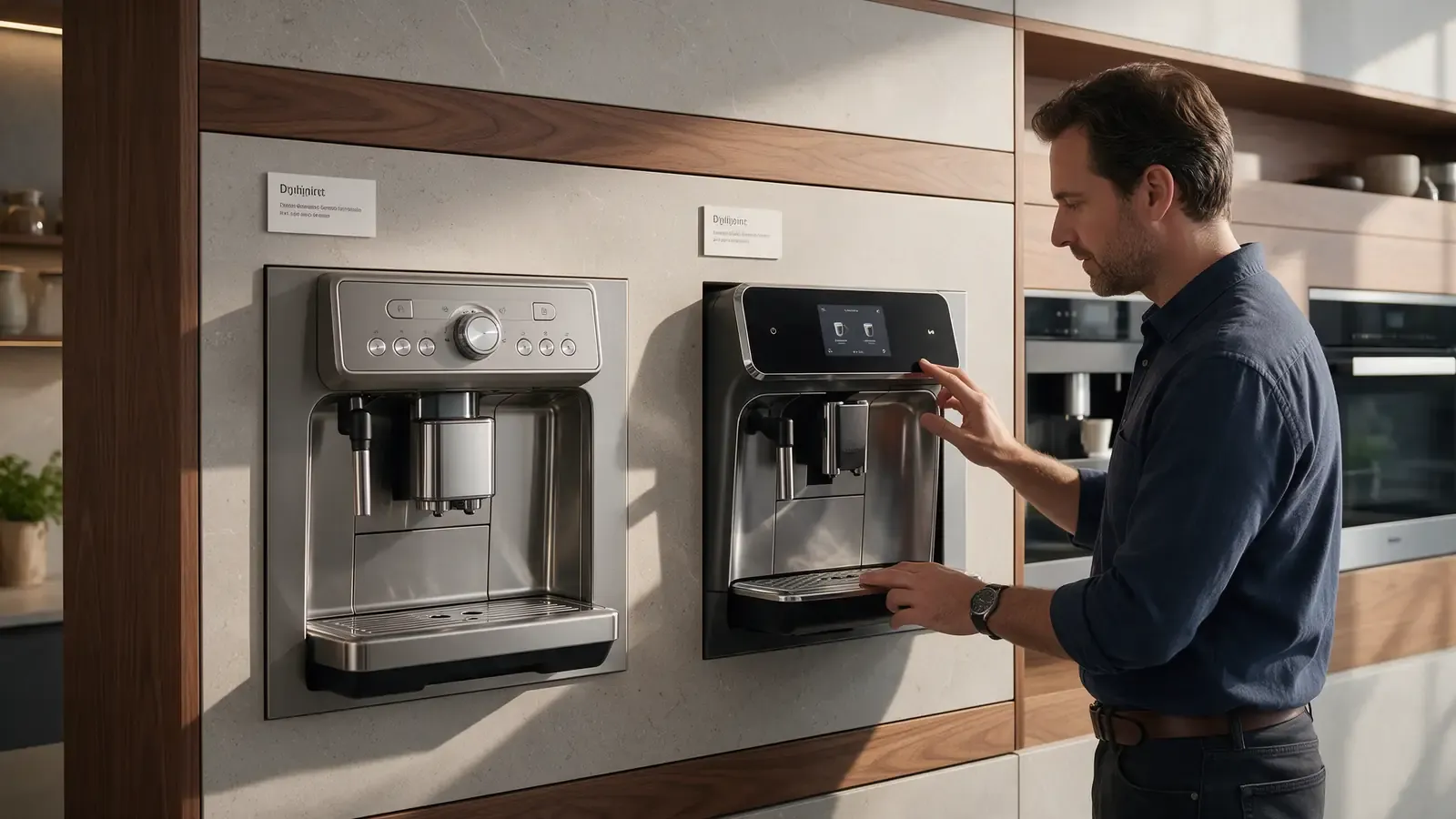
Handles, fronts and trim are often shared across a product line, while internals change. A machine installed a few years after a neighbor’s can look the same in the niche and still use a different mechanism. That is the reason a technician reads the label before opening anything, and it is also why a photo of the label beats a description of the front panel.
Use fresh beans and avoid very oily roasts, which leave residue that gums the mechanism. Empty the waste container before it is full. Run cleaning programs on schedule, using the specified products. Keep the water filter, if fitted, replaced on time so scale does not stiffen moving parts.
In Bay Area homes with hard water, a more frequent descaling schedule helps the seals, and fog or coastal humidity can encourage mildew if the water tank sits unused for days.
No. Designs change between generations, so parts and procedures depend on the exact model.
Only if your manual says it is user-removable. Otherwise run the cleaning program and do not open the machine.
Causes include a worn seal, too fine a grind, a weak pump or a brew unit not closing fully. A diagnosis separates them.
The model number from the label, a photo, the symptom, any displayed message and your ZIP code.
Not necessarily. Many brew unit faults are repairable, and an estimate will show the real comparison.
Share a few details and we’ll confirm an appointment. Prefer to talk? Call us and we’ll help right away.