


In-home Bertazzoni repair across the San Francisco Bay AreaMon–Sat 8 AM – 7 PM
Most drain, odor and cleaning complaints begin at the sump. Learn what an owner can safely lift out, what to look for and when the rest is left to a technician.
Repair guide
Everything a dishwasher washes off a plate ends up in one place. Water falls to the bottom of the tub, passes through a filter and collects in the sump before the pump either recirculates it or sends it down the drain. When that area clogs, the symptoms show up everywhere else: standing water, dirty dishes, odors and drain errors. The filter is the only part of that route an owner can safely reach, which is why it is the first thing to look at.
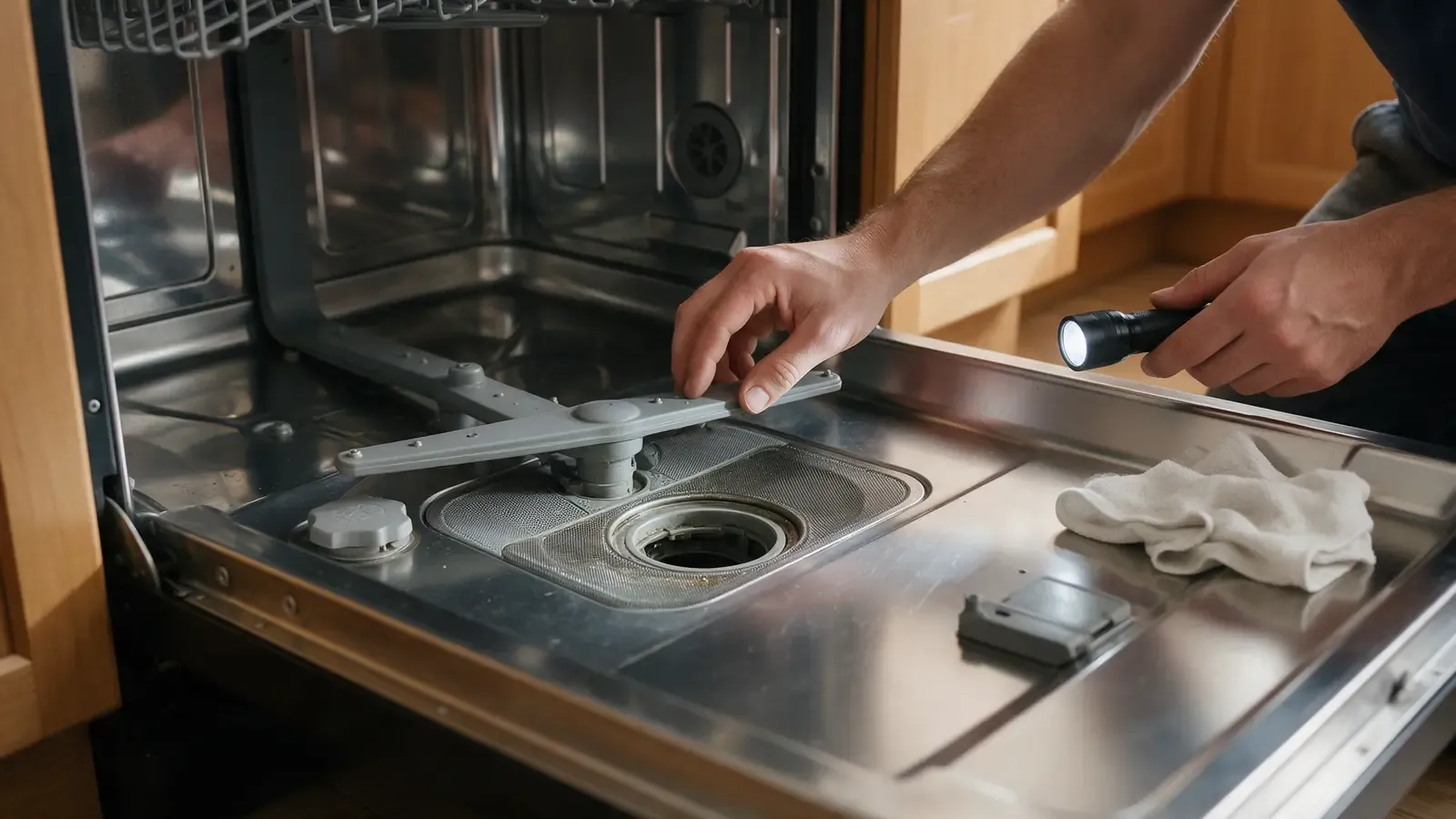
The layout varies with the model, but a multi-stage filter system like the one on the DW24XV generally has a coarse screen, a fine mesh and a cylindrical or flat insert that twists out. Beneath it sits the sump, a shallow basin where water collects. The pump inlet, the drain connection and sometimes a check valve sit below or beside it. A check valve lets water leave but stops it flowing back into the tub, so a faulty one can show up as water returning after the pump stops.
The owner-accessible part is the filter insert and screen. The sump itself, the pump and its seals are not user-serviceable.
A clogged filter has recognizable symptoms. There is an unpleasant smell when you open the door after a cycle. Water remains in the tub, or the machine slows when draining. Dishes come out gritty and cloudy, with food particles redeposited on glasses. A drain error or a cycle that never finishes can follow. Poor washing with a clean-looking filter points somewhere else, such as the spray arms or the water supply, so a dirty filter is a likely cause but not a certain one.
Glass fragments, bone bits, fruit pits, labels, toothpicks and paper fibers are the usual offenders. A single piece of broken glass in the sump can damage the pump if it is run again, so stop and check if you hear a chip.
With the machine off and cool, slide out the lower rack. Your manual will show how to unlock the filter, usually with a quarter turn, then lift it out. Hold it over the sink to avoid spilling trapped water and debris. Rinse under warm water and brush gently with a soft brush, never a metal scourer. Look through the mesh against light to see that every opening is clear.
Reinstall in the same order, and make sure the filter seats fully and the locking mark lines up. A filter that sits proud will rattle or leak debris into the sump.
With the filter out, use a flashlight to look into the basin. You may see grit, a glass shard or a clump of food. Remove loose items with your fingers carefully, or with a damp paper towel, but only if they are clearly visible and within easy reach. Watch for sharp edges.
Stop if you see something lodged near the pump opening or if the area feels gummy and deep. Reaching further risks damaging the pump housing or pushing material in deeper. Never use a screwdriver, a plunger or a chemical drain cleaner in the tub, since the parts in this area are plastic and the chemicals attack seals.
Getting at the pump, drain valve and hoses below the sump needs the machine to be isolated from power and water. Often the dishwasher is eased out of its cabinet, or panels are removed, to reach the area. A technician inspects the impeller for jammed debris, checks the drain pump for resistance, inspects the check valve and examines the hose junctions. The result is a measurement-based diagnosis, not a guess.
Leave the unit installed unless you are asked to move it. Pulling a built-in dishwasher out without disconnecting the supplies strains hoses and wiring.
A small amount of water at the bottom of some dishwashers is normal and is part of how the sump is kept sealed. Several cups, or a tub where water sits deeper than the filter, is not. Check the filter first, then the sink side, where a disposal knockout plug that was never removed can block drainage on a new installation. A sink-side blockage and a pump fault both leave water in the tub, which is why the sink is checked before the pump is blamed. Record whether the water is clear or cloudy and whether it smells.
A sour smell almost always points to organic buildup in the filter or sump. Clean the filter, wipe the visible sump rim and run a hot empty cycle. If the smell persists, a technician can inspect the lower hoses where residue gathers. A smell that returns within a few cycles of cleaning the filter suggests residue further down the route than the filter can reach. Do not mask the smell with fresheners dropped into the tub, which can foam and clog the filter further.
A brief habit prevents most problems. Scrape large food into the trash, not the dishwasher. Rinse the filter every few weeks, and more often if you cook a lot of fibrous or seedy foods. Run a hot cycle with no dishes now and then to flush warm water through the system. Keep the sink disposal clear, since a blocked disposal outlet can back up into the dishwasher.
A related walk-through on how often to rinse the filter is in Bertazzoni dishwasher filter cleaning rhythm.
In districts of the Bay Area with harder water, scale can build up on the filter mesh and the sump walls, which narrows passages and traps debris. A soak of the removable filter in diluted vinegar can loosen it. In older homes with long, slow-draining sink lines, a sluggish drain can look like a dishwasher problem, so check that the sink drains freely too.
If the filter is clean and the problem remains, collect the cycle stage, the error shown and whether water stays in the tub. Our guide to Bertazzoni Dishwasher Repair explains the visit, and a written estimate is provided after diagnosis. Nothing is replaced without your approval.
Most twist a quarter turn and lift out once the lower rack is removed. Your owner manual shows the exact steps.
Every few weeks is common, and more often with heavy cooking or hard water. Inspect it whenever the machine smells or drains slowly.
Only to remove clearly visible loose debris. Do not push into the pump opening or use tools.
No. Chemicals damage seals and plastic parts and can be dangerous to handle.
Remove visible pieces carefully and stop running the machine if you hear grinding. A technician should check the pump.
Share a few details and we’ll confirm an appointment. Prefer to talk? Call us and we’ll help right away.