


In-home Bertazzoni repair across the San Francisco Bay AreaMon–Sat 8 AM – 7 PM
The grinder finishes, the machine hums, and then nothing moves. A stalled brew unit has a handful of causes, and some are as simple as coffee grounds.
Repair guide
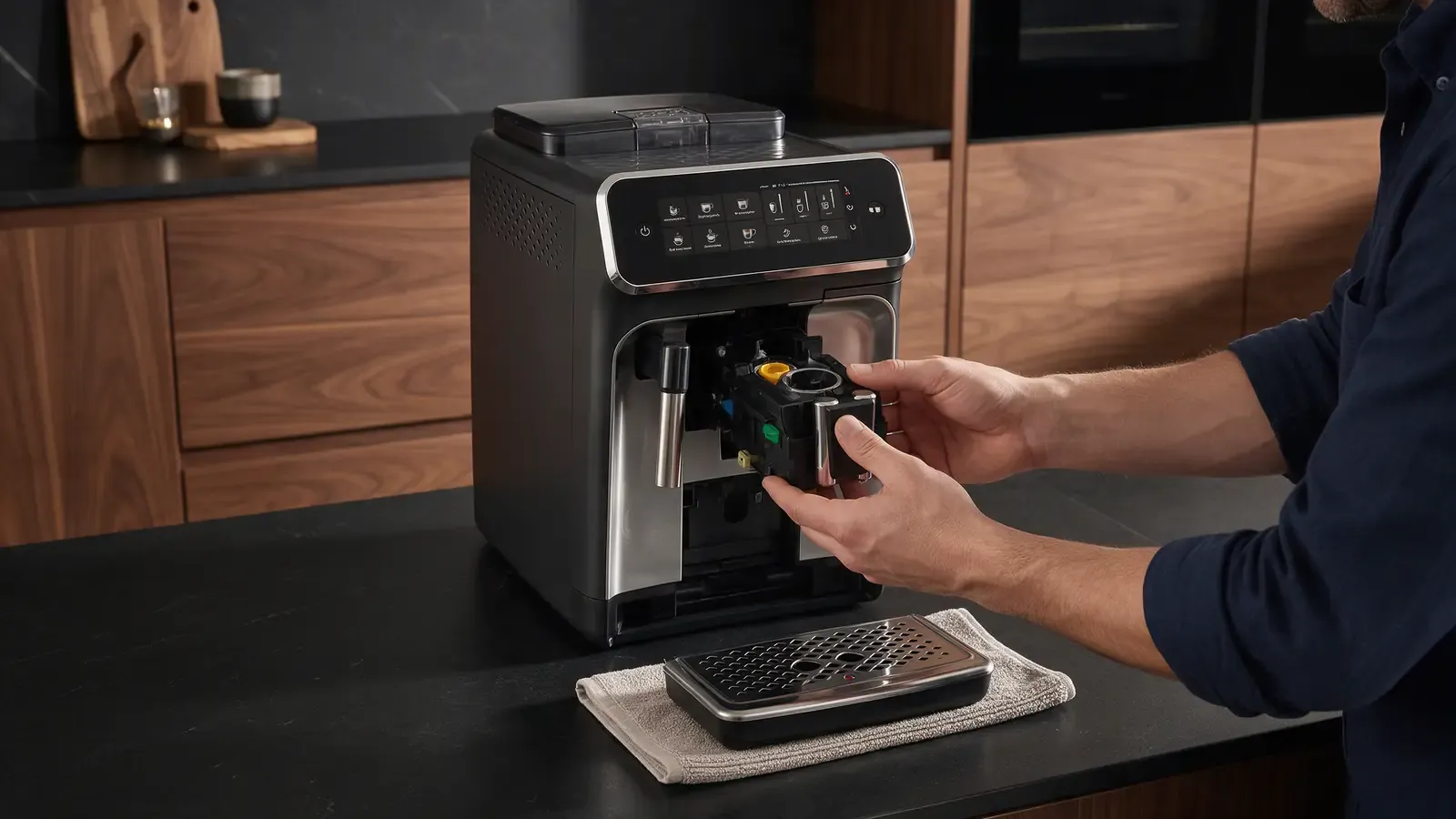
Inside a built-in bean-to-cup machine, the brew unit is a small mechanical chamber. It receives ground coffee, compresses it, receives hot water through it, then ejects the used puck into a waste container. All of that happens by one motor moving the chamber through a fixed set of positions.
When it stalls, the machine usually knows. The motor is asked to move and the position sensor does not confirm arrival, so the control stops the cycle and shows a message. The message is therefore about movement, not about the drink.
Which stage the unit stops at is the best diagnostic clue. Stopping at the start of the cycle suggests something blocking its home position. Stopping near the end suggests the ejection stage. Both clues are worth reporting exactly, because a unit that stops at the start and one that stops at the end are blocked in different places.
Compacted or oily coffee residue is the most frequent cause. Dark, oily beans leave a film that sticks to the chamber and its slides, slowing movement until the motor trips. Too fine a grind packs the chamber hard and does the same. The grinder is the burr set that crushes the beans to a set fineness, so the grind setting controls how much coffee the chamber has to compress.
The waste container can also be the villain. If it is overfull or seated imperfectly, the puck cannot be ejected and the unit jams at the last step. Water hardness plays a role as well: scale on moving seals increases friction. Scale is the mineral deposit left behind when hard water is heated, and it accumulates with use, so a stall can appear well after the last clean.
Finally there is wear. Gears, the position sensor or the motor itself may weaken. That is a technician repair and is best identified by listening and timing rather than guessing.
Follow your manual, and only touch what the manual says is user-serviceable. In most built-in machines, that includes the water reservoir, drip tray, waste container and, on some, the brew unit itself after power is off.
Do not force the unit back into place. If it does not seat easily, something is misaligned or still inside, and forcing it will create a bigger problem.
Owners sometimes switch to a very oily dark roast or a flavored bean and the stalls start soon after. Oily beans coat the chamber and the grinder path. A coarser grind setting reduces the packing force, while a clean unit tolerates more.
Grind-related noise is covered in the grinder sound guide. If the grinder sounds strained at the same time as the brew unit sticks, say so, because both can share a root such as residue buildup.
Do not change the grind setting while the grinder is running. Adjust only as the manual directs and test with a small batch.
On site, the technician watches a full cycle and notes the point at which movement stops. The brew unit is removed and inspected for residue, wear and smooth travel, and the position sensing and motor load are checked while the unit moves.
Water flow through the unit is tested separately, since a stall mid-cycle can be mistaken for a flow issue. A flow problem tends to show up as weak or missing water at the spout, while a brew unit stall shows up as the movement stopping. Where a code is shown, the coffee E01 code page explains how model-dependent messages are handled.
A written estimate comes before any parts are replaced, and approval is yours to give.
A built-in machine rewards a simple weekly habit. Empty the grounds container before it is full, wipe the visible chamber area as the manual allows, and run the rinse program when prompted rather than skipping it. These small acts keep residue from hardening.
Use clean, dry beans and avoid leaving a hopper half-full for weeks, since stale oily beans coat the grinder and brew path. Buy in quantities that you will use up in a few weeks.
Descaling on the schedule shown by the machine matters as well. Scale is gritty and adds drag to moving seals. For alerts that keep returning, see the descaling alert guide.
Listen to the machine through a full cycle. A smooth hum followed by a sudden click and silence suggests the motor reached a stop it could not pass. A repeated stuttering buzz suggests the motor is trying and failing to move, which is more serious for the motor.
Time how long the stall takes to appear after you press brew. Stopping within a second or two points to the home position or a blockage. Stopping after the water starts points to the brew stage or ejection.
Share these notes at booking. A description like stops after grinding, before water, every time is worth more than a generic complaint about the machine not working. It also lets us separate a one-off stall from one that repeats at the same point in the cycle.
Stop using the machine if you smell burning, see water leaking into the cabinet, or hear grinding that does not stop when the cycle ends. Switch off at the control and do not keep retrying to force it through.
If one cleaning and rinse fixes it, keep a simple rhythm and use the machine normally. If the stall returns within a few days, the cause is mechanical and ongoing.
Bay Area water varies from soft in the Peninsula’s reservoir-fed areas to harder in parts of the East Bay and South Bay, which affects scale. See Bertazzoni coffee machine repair for how service works.
Only if your manual describes removing it. Follow its steps exactly and use only water unless it states otherwise.
Different drinks use different doses and pressure. A heavier dose can expose residue or wear that a lighter one does not.
It can if scale was adding friction, but it does not clear compacted grounds or repair wear.
It is not usually a safety issue, but water leakage or burning smells mean you should switch off and call.
Share a few details and we’ll confirm an appointment. Prefer to talk? Call us and we’ll help right away.