


In-home Bertazzoni repair across the San Francisco Bay AreaMon–Sat 8 AM – 7 PM
The model number decides which parts and wiring diagrams apply, but the label is not always where owners expect. Learn where to look without pulling the oven out.
Repair guide
Anyone who has tried to read a model number off a built-in oven knows the frustration. The sticker is small, the oven is flush in cabinetry, and the number can be partly covered by the door. Yet the number on that label is the single most useful piece of information for any repair request.
Bertazzoni makes ovens in different sizes, control styles and electrical ratings, and models with similar names can have different parts. The 30-inch single oven MAST30FSEXV is an example of a full model number that should never be shortened. Dropping a character can point a technician to the wrong parts list or the wrong error-code table. Two ovens that both read as 30-inch single ovens can still be different designs underneath, so the full number is what identifies the control board, touch controls, door lock and temperature probe that belong to yours.
The rating label also shows the electrical requirements and often a serial number, which can help with production-run questions. Keep serial numbers off public posts and reviews.
Where the label sits depends on the configuration, so the manual is the final word for your oven. These are places worth checking with the oven cool.
Use a flashlight and look from an angle, since foil labels reflect light and etched numbers are easier to see sideways.
Cabinet trim, a door held at a partial angle or a film of grease can all hide a label that is actually there, so look in more than one spot before deciding it is missing.
Double wall ovens and stacked configurations may carry one label for the entire unit, or separate labels for each cavity. On a double, check the upper and lower openings. If the two ovens have different features, the label for the one with the problem is the one needed. A fault in the upper cavity does not automatically mean the lower one is affected, which is why the label for the oven that misbehaves is the useful one. For a combination of oven and microwave or warming drawer, photograph every label you find and write which cavity each came from.
Ranges are different again. Freestanding ranges usually carry the label on a frame area that is visible when you open the oven or a storage drawer, but check the manual for your particular style.
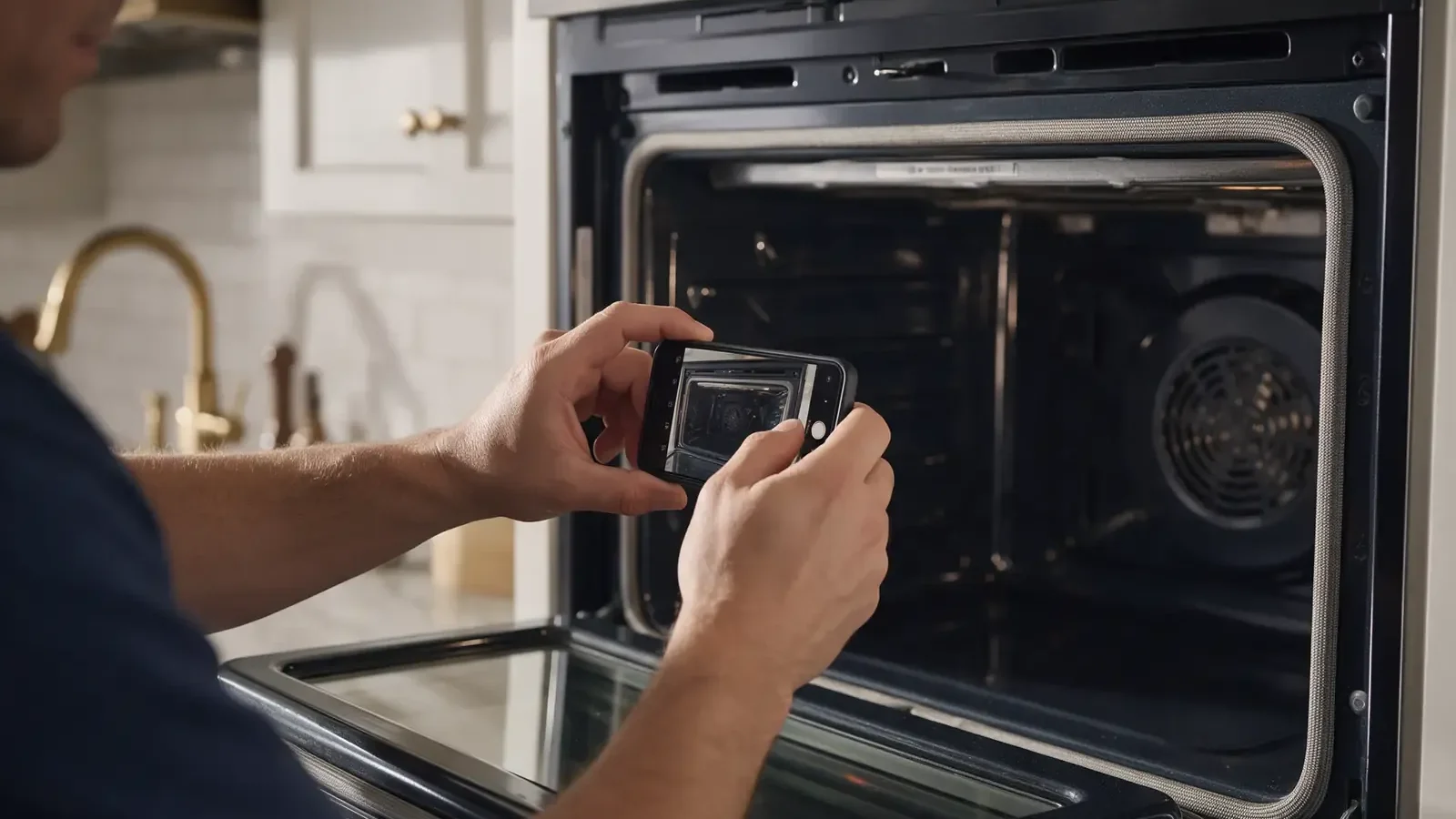
Take the photo with the flash off to avoid glare. Hold the phone parallel to the label, and take one wide shot showing where the label sits plus one close-up. Check that every character is legible before sending it. If the characters are worn or covered by grease, wipe the label gently with a damp soft cloth. Do not scrape or use solvent, which can wipe away the print.
If the label is partly hidden by the door, close it slowly and see whether it is exposed at a different opening angle.
In some installations the label is only visible when the oven is withdrawn from its cabinet. Do not do that yourself. Built-in ovens are heavy, are wired to a dedicated supply and are often screwed to the cabinet. Pulling one forward can strain the supply cable.
Instead, check the original paperwork, a purchase receipt, the installation drawing or an earlier service record. The technician will determine safe access if none of these exists.
Labels use small type, and several characters are easy to confuse. A zero and the letter O can look the same, as can the digit one and the letter I, and the digit five and the letter S. Read the number aloud slowly, compare it with the manual’s cover page and type it exactly as printed. If one character stays uncertain, send the photo along with your typed version so the two can be compared. A photograph removes the guesswork, and it also shows the electrical ratings printed beside the model.
Save the label photo in an album on your phone named for the kitchen, along with pictures of the other appliances. When a problem comes up months later, you will not need to open any doors. In a rental or a house you have just bought, take these photos on day one, since previous owners rarely leave the paperwork behind.
A model number typed from memory, or guessed from the glossy brochure, can send everyone down the wrong path. A technician might arrive with a part for a related model that has a different connector, or look up a code that means something else on your control. A label photo is the shortest route to a correct first visit, and it costs you thirty seconds with a flashlight.
When you contact us, give the complete model number, the symptom, any displayed message, the stage or mode in use and your ZIP code. Add the label photo. That combination lets the first visit be planned around the right parts and procedures, not a general look. The Bertazzoni Ovens page lists the symptoms that are most commonly reported, and Contact is where to send the details.
With the model identified, a technician confirms the specifications, checks the matching wiring and service notes and tests the oven to find the fault. A written estimate follows diagnosis, and nothing is replaced without your approval. For a fuller description, see Bertazzoni Oven Repair.
In older Bay Area kitchens, where ovens may have been installed during an earlier remodel, original paperwork is often gone. A clear photo of the label, taken once and saved to your phone, is worth keeping for years.
Similar names can mean different parts and codes, so the complete number prevents the wrong parts list from being used.
Usually yes. Check the cavity frame, door edge, drawers and paperwork before considering anything else.
No. The model identifies the design, and the serial identifies the individual unit. Both may appear on the same label.
Wipe it gently with a damp cloth and photograph it at an angle. Otherwise use the manual or purchase paperwork.
No. Built-in ovens are heavy and wired to a dedicated supply, so leave them in place.
Share a few details and we’ll confirm an appointment. Prefer to talk? Call us and we’ll help right away.