Oven Repair
Uneven browning, a slow preheat or a door that stays locked each point to a different part of the oven, and each…
In-home Bertazzoni repair across the San Francisco Bay AreaMon–Sat 8 AM – 7 PM
A short guide to Bertazzoni ovens in Bay Area homes: which kinds exist, what usually goes wrong, and where to find the number printed on the label.
Appliance line · Oven & Range
Bertazzoni ovens are built into cabinetry as single or double units, and the same oven technology sits inside the lower section of its pro-style ranges. They are electric or gas depending on the model, and many offer a convection mode that circulates air with a fan. The three series you will hear about are Professional, Master and Heritage, which differ mainly in controls, trim and element layout. A convection mode adds a fan and its motor, so an oven with that mode has one more moving part to consider when baking turns uneven.
If you are trying to work out what you own, start with the series name and the width, then confirm it against the model label.
A detailed example is the Bertazzoni MAST30FSEXV Repair page, which covers a Master series single oven.
People rarely say “the element failed.” They say the cake is dark on one side, the roast takes an hour longer, or the door will not release after cleaning. Those everyday observations are what a technician works from.
Most oven trouble starts small. A heavy spill left to bake on, a gasket pinched by a pan handle, or racks left in during a clean cycle can each shorten the life of a part. Wiping the cavity after it cools, keeping foil off the floor and running self-clean only when it is needed all help. The door gasket, the soft seal around the door, keeps heat inside the cavity, so check that it is not folded or pinched when the door closes.
Self-clean deserves a note of its own. It pushes the cavity far above cooking temperatures, which stresses the door lock and sensors. If you are going to run it, do so during the day with a window open, not last thing at night, so you can notice smells or noises early.
Tell us the mode, the setpoint, how long you waited and what the food looked like. Say whether the issue came on suddenly or crept in. A baker who notices the left side browning faster for weeks gives us a very different starting point than a cook whose oven died mid-roast.
When an oven shows a message, the code and the mode you were in tell more than the code alone. The pages below describe how each reading tends to show up on this family. A code that appears once and clears differs from one that returns after a power reset, so note which of the two you saw.
On a built-in oven, look along the frame around the door opening, or on the side wall of the cavity once the door is open and the racks are slid out. Some units carry the sticker on the front edge near the hinge. Photograph the complete designation, including every letter, because a shortened name can point to a different oven.
The kitchen it lives in also shapes what you see. Small older flats limit airflow around a built-in. Coastal fog adds moisture that can reach controls, and inland heat adds load on top of the oven’s own.
Gas ovens add an igniter and a gas path to the picture, and those parts are handled only by a technician. Electric ovens rely on bake and broil elements that glow red when working, so a missing glow gives you something to report. Tell us which type you have, because the first tests differ. An electric oven whose broil element glows while the bake side stays dark points the search toward the bake circuit.
Keep your own checks to the outside of the oven, meaning the breaker, the racks, the door closing and a photograph of the display. Do not open panels or touch gas parts. When you are ready for a technician, the paired page Bertazzoni Oven Repair explains the visit, and the contact page lets you send the model number and symptom.
Check the frame around the door opening and the side wall of the cavity. Photograph the full number.
Not reliably. Controls and components differ by series and generation, so the model number decides.
The model number, which mode fails, any code you saw and your ZIP code.
Uneven browning, a slow preheat or a door that stays locked each point to a different part of the oven, and each…
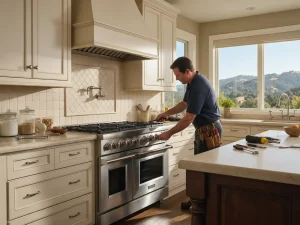
A freestanding range packs burners and an oven into one body, so a fault in one half can look like a fault…
A door-lock reading on the display, usually during a cleaning cycle or a long bake, and the checks worth making before anyone opens the oven.
A longer code that appears while the oven is already working, linked to the door lock or the control driving it, and what to note before calling.
When the oven shows E02 the heating side is under suspicion: slow preheat, cool cavity or uneven browning, and what to look at before a visit.
The oven thinks the cavity is hotter or colder than it is. How an E03 sensor reading shows up in baking results, and which checks are safe.
E04 is a general sensor-circuit entry, not a named probe. What owners notice, when it tends to appear, and why a meter is needed to narrow it.
A control-board or communication message that can follow a power event; what to notice and which clues speed a technician up.
How to describe heating, uneven baking, convection fan and self-clean problems on the MAST30FSEXV, and which checks are safe at home.
Bertazzoni freestanding ranges combine burners and an oven in one body, and the fuel type decides how each half is serviced.
From warm shelves to frost and puddles, this page maps the common Bertazzoni refrigerator complaints and shows how to find the model…
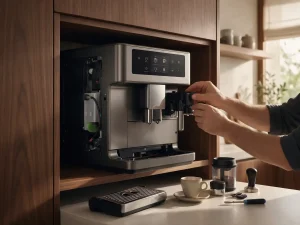
Built-in coffee machines combine water, heat, grinding and brewing in a cabinet, and most problems trace to one stage of that sequence.
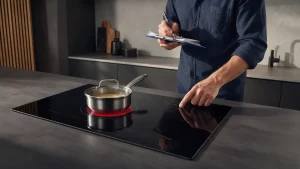
Gas and induction cooktops from Bertazzoni fail in different ways, so the type on your counter shapes how a fault gets described.
Share a few details and we’ll confirm an appointment. Prefer to talk? Call us and we’ll help right away.