


In-home Bertazzoni repair across the San Francisco Bay AreaMon–Sat 8 AM – 7 PM
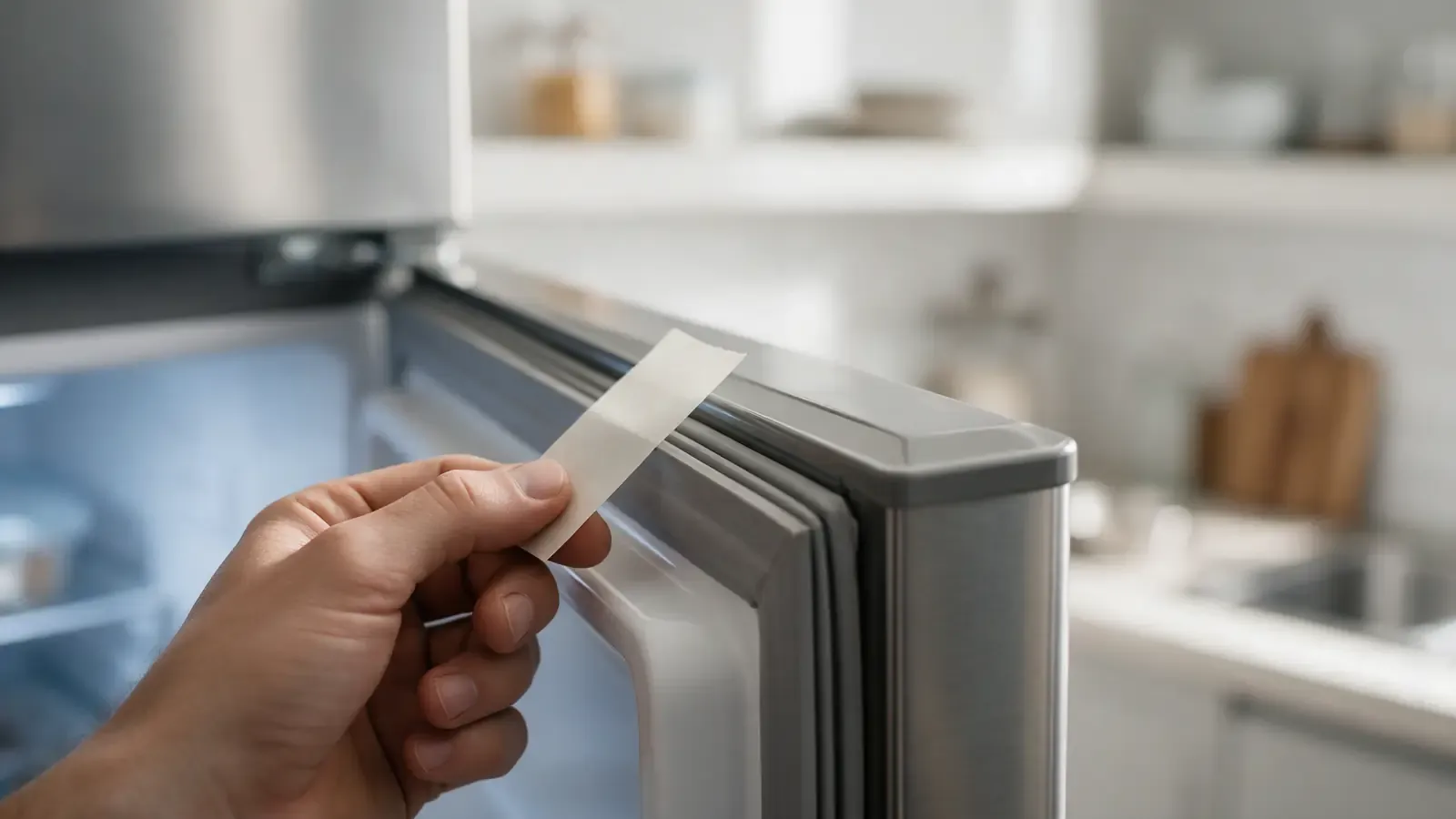
A strip of paper shut in the door shows where a gasket has stopped sealing. Here is how to run the test properly, read the result and decide what to do next.
Repair guide
The gasket is the soft bellows along the edge of a refrigerator door. It compresses against the cabinet face and keeps cold air in. When it hardens, tears, or the door sits out of square, air creeps in. You see the result as frost near the door edge, condensation along the seal, or a compressor that runs far more than it used to. Each of these signs is the cabinet reacting to warm, humid room air entering where the door should be sealed.
Use a sheet of ordinary printer paper or a currency-sized strip. Open the door, lay the paper across the gasket at the top corner, and close the door on it. Tug the paper straight out. If it slides out with no resistance, the seal at that spot is not gripping. If it pulls with firm, even drag, the seal is working there.
Repeat at the middle, bottom, hinge side and latch side of each door, and on each drawer. A column or French-door model like the REF36FDFZXNT has several seals to test, including the freezer door and drawers.
A single loose spot often means a local fold, a gap in the gasket or a door hanging slightly out of alignment. Loose spots on the same side all the way down point to a hinge or door-position problem. A gasket that grips well on the hinge side but loosely on the latch side often suggests a warped door or a latch that does not draw the door in fully. The same pattern can also come from a door that was overloaded and now hangs slightly lower on one side.
Weak grip everywhere suggests a hard, shrunken gasket or a cabinet that has shifted. Note which spots failed and photograph them.
Common reasons are fairly mundane. Food residue and sticky spills glue the gasket to the cabinet, and then tear it when the door is opened. Magnets inside the gasket can weaken over time. The gasket can flatten if the door is overloaded and sags. A fold at the corner can form when the door is shut on a stuck bottle or bag. In a refrigerator installed in a panel-ready cabinet, a trim piece or a panel that is slightly too tight can prevent the door from closing flush.
Cleaning solves a surprising share of complaints. Wash the gasket with warm water and a mild soap, wipe it dry, and get into the folds with a cloth wrapped over a spoon handle. The folds are where residue hides, and it is also where a gasket tends to stick and tear.
Clean the gasket as described, empty the bin shelves that stick out from the door, and check that the unit is level using a small level on a shelf. Make sure nothing, such as a bag or a bottle, props the door open slightly. Close both doors on a French-door model with an even push, and watch whether either one swings back open.
After a day, run the paper test again and look for improvement. Avoid applying petroleum jelly, oils or sealants to the gasket, and do not heat or reshape it with a hair dryer, since overheating can distort it permanently. A gasket that has been reshaped by heat may look better for a moment but seal worse afterward.
The refrigerator doors get the attention, but the freezer drawer seal matters as well, because the freezer runs colder and any leak freezes into ice. That ice can then hold the drawer slightly open, which lets in more air and makes the problem grow. Test drawers with the paper too, pulling the strip while the drawer is closed to its normal position. A drawer that will not close fully because it is overpacked, or one whose bin rides on top of the seal, behaves like a failed gasket even when the gasket is intact.
Also check the center area where two French doors meet. A flipper or astragal strip there handles the seal, and it can stick or bend.
Dim the room and shine a flashlight along the edge while a helper stands on the other side of the door. Light leaks do not matter inside a sealed cabinet, but you can see where the gasket does not touch. In a quiet kitchen, a hiss at the door edge after you close it is worth noting, as is a door that pops open slowly after being shut. A slow pop-open can mean pressure or a catch is working against the seal rather than the gasket alone.
Take photos of anything you find. Those details help a technician decide whether the job is a clean, an adjustment or a part.
The technician checks door alignment and hinge tension, tests the gasket across its full length and inspects the corners. Door closure is checked against the cabinet, and a leak detection pass or temperature profile may be taken to see the effect on the cooled space. Frost patterns near the door and ice buildup on the coil can corroborate air infiltration.
If the gasket is damaged, it is usually replaceable as a part specific to the door. Replacement should follow measurement, not a hunch, because a bad hinge or latch will ruin a new gasket quickly. Which of the checks fails first tells us whether the door, the latch or the gasket itself needs attention. See Bertazzoni Refrigerator Repair for what a visit includes.
A leaking gasket makes the compressor run longer and can allow food to warm on the door shelves first. Frost near the seal grows into ice ridges that stop the door closing, which makes the leak worse. Foggy marine air in coastal districts and warm inland summers both load the system, so a seal that is marginal in January can fail visibly by August.
If your refrigerator is also running warm, see Where Temperature Sensors Sit in Column Refrigeration for sorting sensor behavior from seal trouble. A written estimate is provided after diagnosis, and nothing is replaced without approval.
The paper should resist a firm tug along the whole seal. If it slides out freely at any spot, that area is not sealing.
Some are press-in, but the correct part depends on the model, and a misaligned door will damage a new gasket, so measurement should come first.
Often, but door position, a prop-open item or a defrost issue can cause it too. Check the seal and the door first.
Some doors have anti-condensation heating in the frame. A slightly warm edge can be normal for the model.
Oils, petroleum jelly, sealants and heat. Mild soap and warm water are enough for cleaning.
Share a few details and we’ll confirm an appointment. Prefer to talk? Call us and we’ll help right away.