


In-home Bertazzoni repair across the San Francisco Bay AreaMon–Sat 8 AM – 7 PM
The cycle runs fine, then pauses with a pool of gray water at the bottom. Several simple things can cause that, and you can test most of them yourself.
Repair guide
The typical story is that the dishwasher fills, washes and then seems to stop. The display may show a code, the cycle time may stop counting down, or the unit may keep going on but leave an inch of water in the tub when the door is opened.
Sometimes the door opens to a tub that is mostly empty, but the cycle never advances. That behavior points toward the sensing of water level or the drain pump’s feedback rather than a blocked hose. Notice which version you have, because the tub contents tell you plenty. A tub with food-flecked water suggests the drain side, while a mostly empty tub suggests the cycle is waiting on a signal.
Also notice when it began. After a family gathering with heavy scraping, after a sink disposal repair, or after a power outage, the likely causes change.
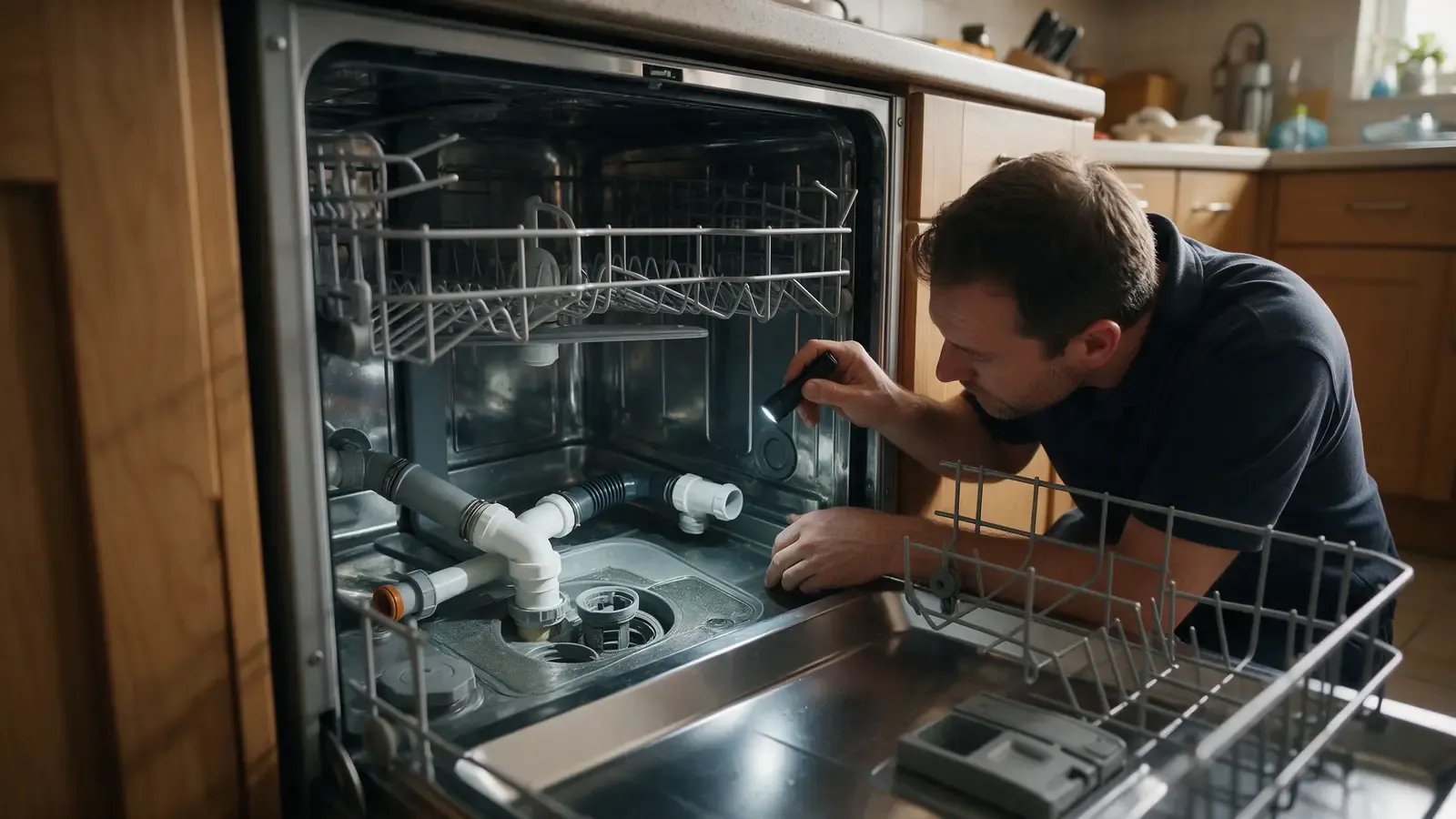
Most owner-level stalls are food and debris. A filter that has not been cleaned in months restricts the drain until the pump gives up on its attempts. The same goes for a small piece of glass, a toothpick or a seed sitting at the sump opening. The sump is the low basin under the filter where water collects before the drain pump pulls it out, so anything lodged there slows every cycle.
A cleaning rhythm that fits your use is covered in the filter cleaning schedule guide.
Many dishwashers share their discharge with the sink drain or garbage disposal. If a new disposal was installed and the knockout plug for the dishwasher inlet was never removed, water has nowhere to go. The same happens when the drain hose loops incorrectly under the counter.
Run the sink and disposal. If the sink drains slowly, the problem is downstream of the dishwasher and a plumber or a drain cleaner is the right call. A dishwasher that drains well while the sink is slow tells you the machine is not the weak point. In older Bay Area homes with clay or cast-iron lines, partial blockage in the shared line is a common cause of repeated stalls.
Look under the sink for a kinked hose, but only pull on what is plainly accessible. Do not disconnect fittings with the machine full of water.
If the filter, the sink and the hose all check out, the issue sits inside the dishwasher. The drain pump may be weak or jammed with a broken glass fragment. A check valve in the drain path can stick and allow water to return. The level sensor can misread the water and keep the cycle waiting. Because the level sensor reports to the control board, a bad reading can look just like a pump that is not working.
A control that expects drain confirmation and never receives it will stall on purpose, which is protective behavior rather than failure. The dishwasher E19 code page describes how drain pump faults are presented for this family.
Hard water residue adds to this over years. In inland areas with hard water, scale on the pump housing and sensor fittings is a practical contributor. Scale does not announce itself, so it is one of the things a technician considers once the simpler checks come back clean.
The technician starts by observing the stall at its exact point, then checks the filter assembly and sump for debris that the owner may not see. The drain pump is tested for operation and its output, and the hose and check valve are examined for restriction.
Water level sensing is verified against actual level, and the control is checked to see whether it is waiting for a signal that never arrives. A written estimate follows, and no part is swapped before you approve it.
Bringing the model number and a description of the stall point speeds this up. A photo of the tub contents after the stall helps too.
A cycle interrupted by a power blip can leave water in the tub, and some controls will resume cautiously rather than drain at once. If the stall followed an outage, a simple cancel-and-drain on the control panel, as your manual describes, may clear it.
Fog and storm season along the coast brings brief outages more often than many owners realize. A machine that stalls mostly after those events is behaving normally; one that stalls on calm days is not.
If the display is frozen or unresponsive, switch the breaker off for a minute and back on. That resets the control without touching anything inside the appliance.
Too much detergent, or the wrong kind, can leave foam in the tub that the water-level sensor misreads. The cycle then pauses at drain as it tries to settle what the sensor sees. Foam also reduces pump efficiency and makes a healthy machine look faulty.
If you see suds when the door opens, run a short rinse with no detergent and cut the dose next time. Switching between pod and powder products in the same week can cause it, as can hand-dish soap accidentally used in a pinch.
Hard water areas call for rinse aid and softer dosing, while soft water areas need even less detergent than the box suggests. Matching the dose to your local water stops a surprising number of stalls.
A one-time stall that clears after cleaning the filter is no cause for alarm. Stop using the machine if water flows back into the sink, leaks around the door or base, or if you notice standing water with a sour smell that returns each cycle.
Do not run repeated cycles to force it through. Each attempt moves more water into the pump and hoses. Never reach into the drain hose or pump area with your hand. Water that returns on its own to the tub after draining can point to the check valve rather than a blocked hose.
For service details, see Bertazzoni dishwasher repair and the guide on sump access.
No. Many cases are a dirty filter or a blocked sink-side line, both of which you can check first.
Once, after cleaning the filter, is reasonable. Repeated attempts do not help and can push more water into the unit.
Yes. If the dishwasher inlet plug was left in place, water cannot leave the dishwasher.
Not for filter cleaning. If you suspect a leak, turn off the supply valve and call.
Share a few details and we’ll confirm an appointment. Prefer to talk? Call us and we’ll help right away.