


In-home Bertazzoni repair across the San Francisco Bay AreaMon–Sat 8 AM – 7 PM
When one induction zone fails and the others run normally, the layout of the electronics explains why. Learn what a power module does and what to check first.
Repair guide
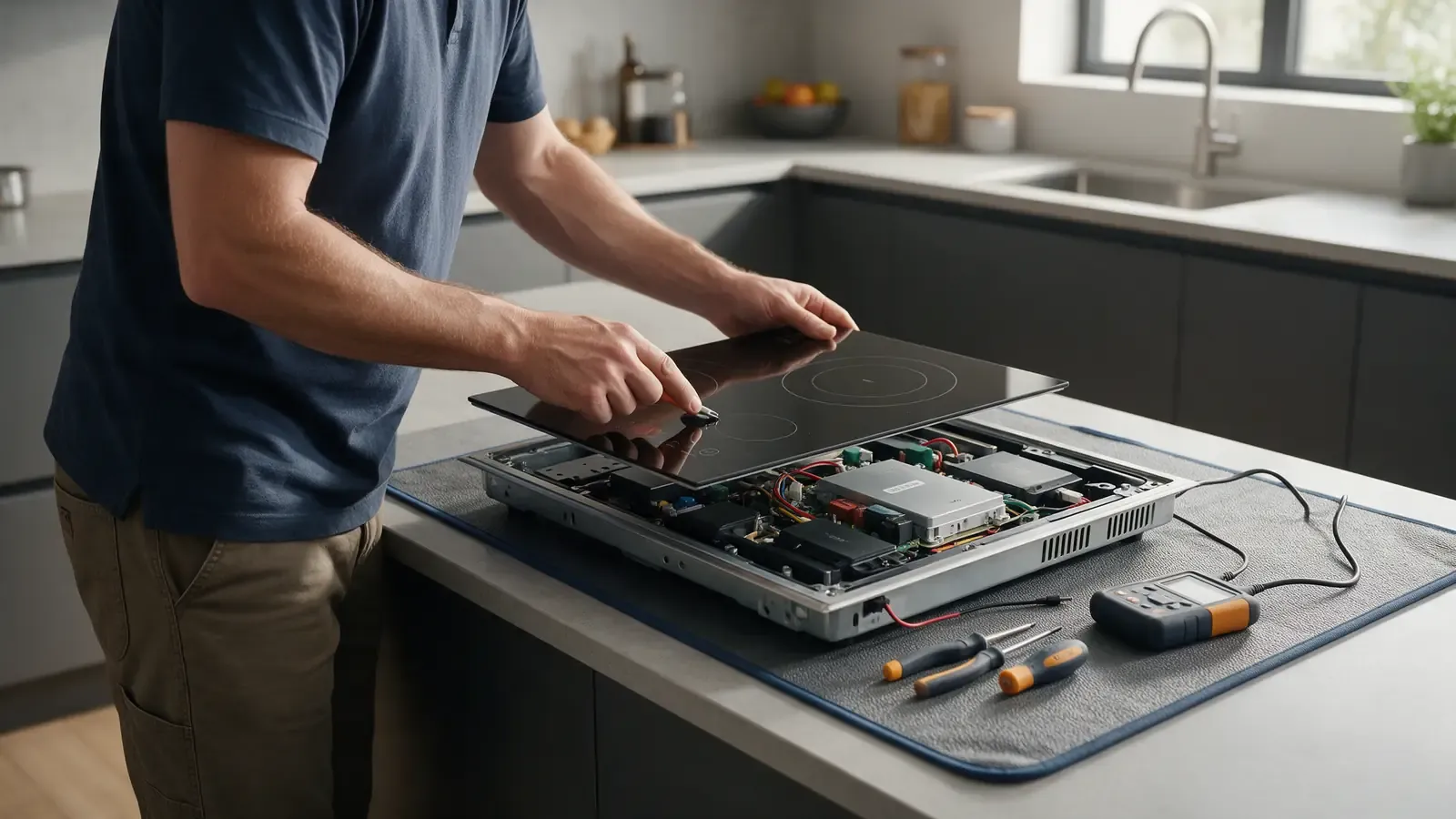
A gas burner and an induction zone are very different machines. A gas burner is a valve and a flame. An induction zone is an electronic circuit that turns line power into a high-frequency current and drives a coil under the glass. In many designs each zone has its own power electronics and coil, so the cooktop is closer to several small appliances sharing one glass top. That is also why a symptom on one zone says little about the rest of the cooktop.
The exact design differs by model, so the label number matters. In general, a zone’s electronics convert incoming power into the high-frequency signal that energizes the coil. They include switching components, a cooling path and sensing circuits that watch temperature and current. The control panel tells each module what level to run, and the module reports back. If that exchange between the panel and a module is interrupted, the zone may stop or show a communication-type message even though the coil itself is intact.
On a 36-inch five-zone cooktop like the PE365INDXV, the layout may include modules shared between pairs of zones and a central user interface. Treat details as model-dependent until the label is confirmed.
If one zone’s module or coil has a problem, the other zones continue. That is why a lone zone that will not heat, flashes an error or trips out under load is a different case from a whole cooktop that will not turn on. It also explains why the same pan works on one zone and not another.
That does not prove the module itself is at fault, though. The coil, the temperature sensor under the glass, the wiring between them and the control can all produce the same symptom, so a technician measures before replacing anything.
Several complaints point toward the electronics for one zone, especially if cookware has been ruled out.
Compare with Confirming Cookware Compatibility Before Zone Diagnosis to confirm the pan is not the culprit.
Power electronics hate heat. A cooling fan under the cooktop moves air across the modules, and a blocked vent, a drawer jammed against the rear or a pile of items stored too close will raise the temperature and shorten component life. The sensing circuits inside the module respond to that heat by reducing power, which is why a cooktop that cooks poorly after a long session may be protecting itself rather than failing. Liquid that seeps beneath a cracked or chipped glass can reach the electronics and cause corrosion.
Any visible crack, chip or deep scratch in the glass is a reason to stop using the cooktop. The glass is not just a surface; it protects the parts beneath.
Run through the pan swap, confirm the control lock is off, and wipe the glass clean. Note whether the cooling fan runs when a zone is in use, since a fan that never spins hints at a thermal protection state. Look at the area around the cooktop for storage that blocks air and keep the cabinet below uncluttered.
Do not remove the cooktop, open the control enclosure or probe any part under the glass. These circuits hold dangerous voltage even when the cooktop is switched off at the panel. See Bertazzoni Cooktops for symptom guides.
Some induction cooktops can combine two zones to heat a griddle or an oblong pan. When zones are bridged, the control coordinates two modules, and a fault in one can disable the bridge while each zone still works alone. If a bridge function fails but both zones work separately, mention it, because that narrows the search to the coordination between modules.
A zone error code names a condition, such as overheating, a missing pan or a communication problem, not a part. An overheating message can come from a blocked fan, an overworked pan or a failing sensor. Use the code to describe the symptom accurately and let measurements settle the cause. A code that returns on the same zone every time points to something repeatable, while one that appears once after a boiled-over pot may simply have been a protective shutdown.
The first measurements confirm incoming supply to the cooktop. Then each zone is tested individually, comparing performance and any error behavior. Coil resistance, sensor readings and module output are checked against model references, and cooling airflow is verified. This order isolates whether the module, the coil, the sensor or the interface is at fault.
When a module is replaced, the new one is tested under load to confirm the zone matches its neighbors. Our process for this is described at Bertazzoni Cooktop Repair.
A faint whistle at high power, a fan that ramps up quickly and a glass surface that feels warm beside the cooking zone are all normal parts of induction cooking. They become worth mentioning when they change. A fan that suddenly roars, a smell of hot electronics or a zone that dims within seconds of reaching boost tells a technician the module is under unusual stress.
A module is usually a significant part, so it is fair to ask whether the repair makes sense for a given cooktop. A single dead zone on a recent cooktop is often worth fixing, while multiple failing zones on an older one deserve a frank cost discussion. You get a written estimate after diagnosis and nothing is replaced without your approval.
In Bay Area homes that moved from gas to induction, the quick win is making sure the cabinet beneath has open airflow and no stored items pressed against the underside.
Not usually. Because zones often have separate electronics, a single zone can often be repaired on its own.
The fan cools the electronics and may continue until temperatures drop. This is normal on many induction cooktops.
No. Stop using it, because liquid can reach the electronics under the glass.
No. Some faults produce no code and are found by measuring the zone’s output.
Keep it uncluttered so cooling air can flow, and check the installation guide for the clearance required.
Each zone senses the pan before it delivers power, so the pan’s material and size matter as well as the module. Swapping pans is the first test before a fault is assumed.
Share a few details and we’ll confirm an appointment. Prefer to talk? Call us and we’ll help right away.