


In-home Bertazzoni repair across the San Francisco Bay AreaMon–Sat 8 AM – 7 PM
A powerful range needs room around it and a hood that pulls its weight. Learn the signs of poor clearance or ventilation and which checks stay safely with the owner.
Repair guide
A pro-style range puts out more heat than a standard slide-in, and it needs a place to release that heat. Clearance to the walls and cabinets, a working range hood and a stable gas and electric supply all feed into how the appliance behaves. When one of those is marginal, the stove shows it through odd symptoms long before anything breaks.
Large ranges have strong burners and big oven cavities. The outer surfaces, rear wall and nearby cabinets absorb the heat. The manual and the installation guide give minimum distances from the range to combustible surfaces, and they are not suggestions. The documents may give separate distances for the sides, the rear and the space above the cooktop, so check each one against the number printed on your rating label. A cabinet pulled in close or a shelf mounted above the burners can discolor, blister or begin to smell when the range is used heavily.
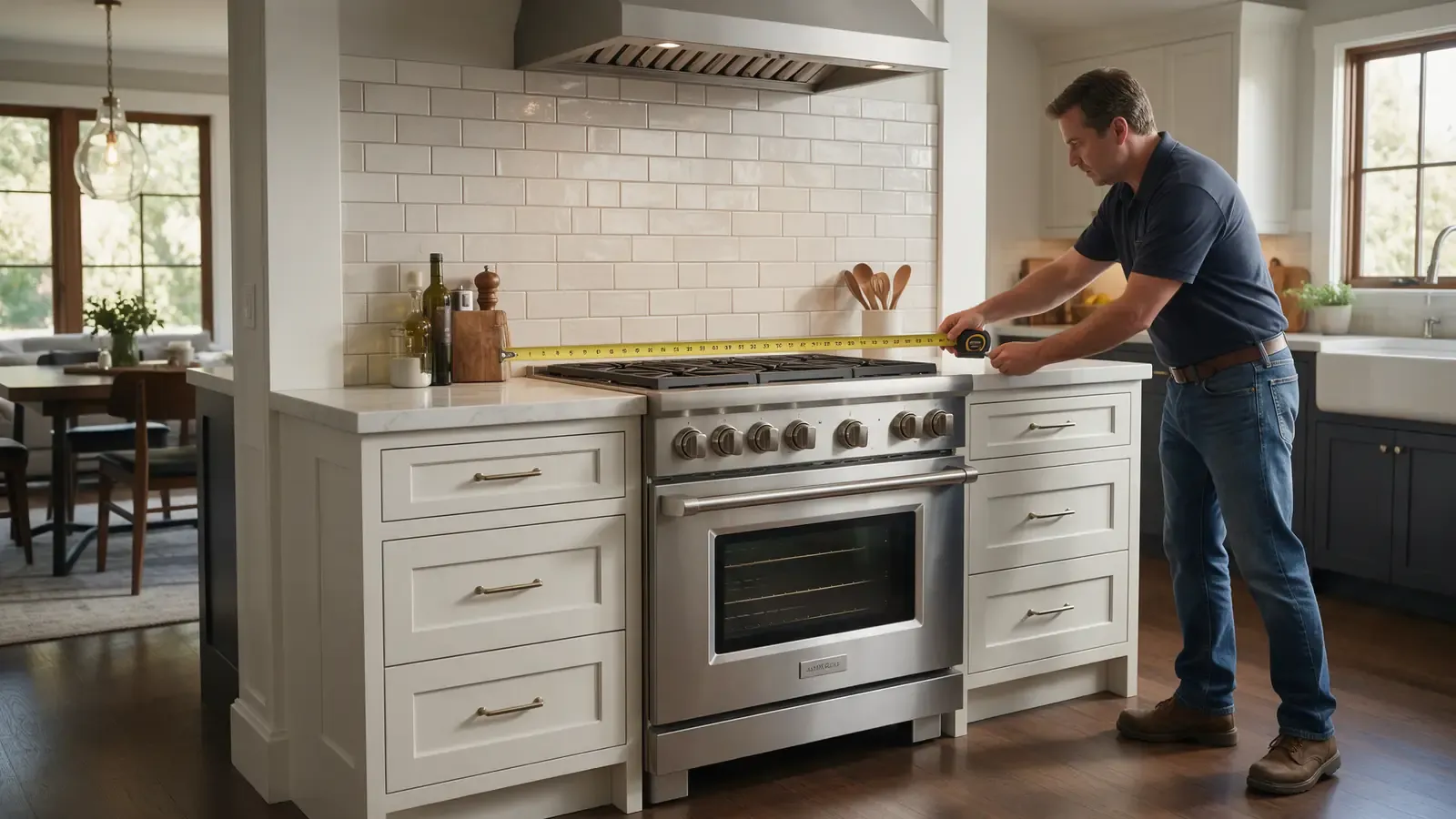
Open the installation documents that came with the range and compare the numbers to what you see. If the range was swapped into an older opening during a remodel, it is worth checking. See Bertazzoni Ranges for how the family is organized.
Some clues show up in the kitchen and some in the range itself. A discolored backsplash or a blistering finish on cabinets within reach of the cooktop is the clearest sign. Oven doors that become unusually hot to the touch, control knobs that get warm, and a persistent burnt-dust smell after a long bake all suggest trapped heat. The range may also run hot compared to the set point if the exhaust path is clogged, or cycle oddly when the control compartment overheats. The control compartment is where the electronic control board and its wiring sit, so odd display behavior after a long bake is worth noting alongside the other signs.
A smell of gas is different and urgent. If you smell gas, leave the area, avoid switches, and call the utility from outside.
A hood captures grease, steam and combustion by-products and carries them out. A hood that is too small for the range, ducts that run long with many bends, or a clogged filter all reduce capture. The result is greasy cabinet fronts, a haze when you sear, and moisture on windows after boiling.
Check the filter. A metal mesh filter holds layers of grease and stops airflow. Remove it as the hood manual describes, wash it in hot soapy water and let it dry fully. Run the fan at each speed and feel for suction at the filter, and confirm that the damper at the roof or wall outlet opens when the fan runs. The damper is a flap that opens with the airflow, so one that stays shut while the fan runs means the exhaust is not getting out.
A strong hood pulling air out of a sealed home needs air coming back in. In a tight remodeled kitchen the fan may struggle, doors may whistle, and combustion appliances can backdraft. The symptom is a hood that sounds powerful but captures little, or a pilot or burner flame that flickers when the hood runs.
Cracking a nearby window while cooking is a quick test. If the hood suddenly sounds stronger, the house is short on makeup air. That is a question for a mechanical contractor, not something to solve by adjusting the stove. Backdrafting means exhaust is pulled back toward a flame instead of out of the house, which is why a flickering flame while the hood runs matters.
With everything cool, look at the sides and rear of the range. Remove stored items near the oven vent at the back of the cooktop, since it expels hot air there. Confirm that no towels, cutting boards or pans sit on the rear of the cooktop surface. Keep the oven door gasket clean so heat is held inside the cavity.
Do not move the range out of position to measure, disconnect a gas line, adjust a regulator or alter the anti-tip bracket. Moving a gas range requires care with the connector and the flexible line, and the anti-tip device must stay in place.
Grease that builds on the hood, the backsplash and the cooktop rim is fuel as well as mess. Wipe the surfaces beside the burners after heavy cooking, clean the filter on a regular rhythm, and keep the space between the cooktop and the wall free of crumbs and paper. Burner ports that clog with spills produce uneven flames, and uneven flames deposit soot on nearby surfaces.
A simple monthly walk-around, looking at the wall finish, the hood filter and the oven door gasket, catches most developing problems early.
The technician starts with the label and the documented clearances, checks the surfaces around the range with a thermometer after a hot bake and looks at how the oven vents. Burner flames are observed for color and stability, and gas supply conditions are looked at without altering the regulator unless warranted. If the control area is overheating, internal temperatures and fan operation are checked. The cooling fan keeps the control area within a safe working range, so a fan that is slow or silent matters alongside the temperature readings.
Findings are written down and photographed so a contractor or cabinet maker can act on any layout fix. The repair visit is described at Bertazzoni Range Repair, and a written estimate always precedes repairs.
Sometimes the range is working exactly as designed and the kitchen is the limiting factor. A technician can confirm that burners, igniters and oven temperatures are within range and then tell you honestly that the fix is a hood upgrade, a duct change or a wider gap, not a repair. That answer saves money, and it protects the appliance from heat it was never meant to absorb. Written notes and photos from the visit can go straight to a contractor.
Many Bay Area homes have older kitchens where a larger range replaced a smaller one in an opening that was never intended for it. Narrow galley layouts and cabinets close to the cooktop make clearance problems common, and coastal fog adds humidity that grease and dust turn into a film on filters. If the range was sized up during a remodel, review the distances, the hood rating and the duct route together, then discuss any gaps with the installer.
It depends on the model and installation, so check the installation guide for your exact label number and measure against it.
Repeated heat or steam can discolor or blister finishes. It suggests the clearance, hood capture or both need review.
It can affect the surrounding kitchen more than the oven, but trapped heat and grease can still stress controls and surfaces.
No. Gas connections and the anti-tip bracket make that a job for a trained installer.
Leave the area right away, avoid switches, and contact the gas utility or emergency services from outside.
Share a few details and we’ll confirm an appointment. Prefer to talk? Call us and we’ll help right away.