


In-home Bertazzoni repair across the San Francisco Bay AreaMon–Sat 8 AM – 7 PM
If a cycle won't start or stops a few minutes in, the door may not be closing squarely. Learn the signs, the simple outside checks and what a technician measures.
Repair guide
The door of a dishwasher is a safety device as much as a cover. A switch or sensor confirms that it is closed before water enters, and the cycle stops if that confirmation disappears. When the latch and the hinges slip out of alignment, the machine can behave as if the door is open even though it looks shut. That is why a door that appears closed to the eye can still fail to satisfy the switch.
The common signs are easy to miss at first. You press Start and nothing happens, or the machine hums and then goes quiet. A cycle runs a few minutes, pauses, and resumes if you push the door. Water may seep at the lower corner because the seal is not compressing evenly. Some owners notice the latch no longer clicks the way it used to, or that the door needs a firm shove to catch. Each of these points to the door path, but none of them proves which part is worn, which is why the checks below come before any replacement.
Built-in models like the DW24XV have a panel-style door, so any sag or twist is easier to see against the neighboring cabinets. A panel that no longer lines up evenly with the cabinets beside it suggests the door is hanging at an angle rather than closing flat.
Several conditions produce the same story. Door springs and hinge arms wear and let the door droop, so it hits the latch strike at a slight angle. A lower rack or an item such as a long utensil may protrude and press the door open by a few millimeters. A loosened mounting screw or a bracket anchored to the cabinet can shift after the machine is bumped during a remodel or floor repair. The latch assembly itself can wear, or its switch can fail, even when everything else lines up. A door that closes cleanly yet still reports open points toward the switch rather than the hinges.
In older Bay Area kitchens, floors that have settled slightly can tilt a unit and change how the door meets the frame. Mention it if the dishwasher was reseated after new flooring.
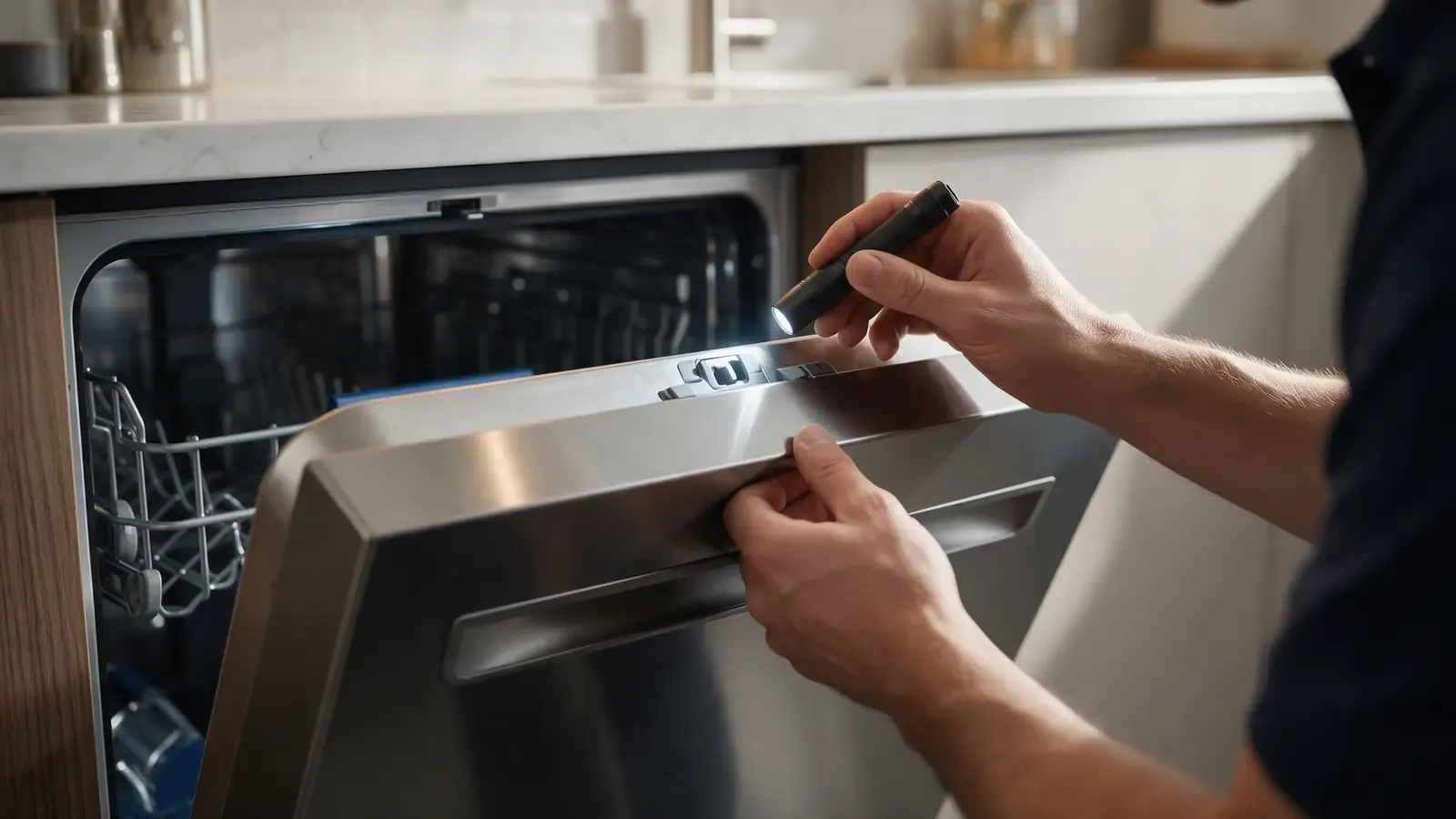
With the dishwasher off and the door open, look at the gap between the door and the tub opening on both sides. Slowly close the door and watch where the latch tongue meets the strike. Check for a lodged spoon, a utensil handle, a cup edge or a rack stop that stops the door short of closing fully.
Make sure the rack is seated on its rails and that the upper rack is not hanging. Wipe the door seal and the gasket line with a damp cloth to clear dried food. Press the door gently shut and listen for a clear click. If you must slam it to make it work, stop and note that.
Do not bend a latch tongue, tape the door switch, wedge a spacer into the latch area or bypass the door interlock. Those moves defeat a safety feature and can let water run with the door ajar. Avoid adjusting the spring tension screws or hinge brackets yourself; uneven tension can make the door fall open under its own weight.
Pulling the dishwasher out of the cabinet to get a better look is usually unnecessary and can damage the supply lines and drain hose. Leave the unit in place unless asked to move it.
Loading the door shelf or leaning a heavy pot on the open door while you load is a quiet cause of hinge wear. The open door is meant to carry its own weight, not yours.
Integrated dishwashers can carry a stainless panel and a coordinating handle, and some owners add a custom cabinet-matching front. Each addition changes the weight the door springs must balance. A door that was true in the first month can start to sag after a heavier front goes on, and the sag gradually pulls the latch tongue off its mark.
If you recently changed the panel or handle, say so. The fix may be a spring adjustment by someone who can measure the door’s weight, not a new latch.
When the dishwasher stops matters. A refusal to begin points at the latch switch or its signal. Stopping a few minutes in suggests a switch that makes poor contact when the pump vibrates the door. A pause that appears only when the dry cycle starts may involve how the door is held against rising steam pressure. Heat and steam during drying can also make a marginal seal or switch behave differently than it did in the wash stage.
Note the stage, the time and whether a gentle push on the door resumes the cycle. A cycle that resumes with a push is a strong hint that the door signal, not the control, is intermittent.
The door is opened and closed repeatedly while its path is checked against the latch strike. Hinge play, spring balance and bracket tightness are examined, and the latch switch is tested for continuity when the door is closed. The seal is inspected for flat spots and compression, and the cabinet panel weight and mounting are considered, since a heavy decorative panel changes hinge loading.
If the cycle pauses mid-wash, the technician looks for intermittent switch contact and compares door position with the control signal. The error or symptom is correlated with door movement, not just recorded. Testing the door signal this way separates a worn latch from a loose hinge, which can look the same from the outside.
Stop using the machine if water is escaping from the door edge, if the door will not stay up, or if the latch fails to hold. For symptoms and pricing structure, see Bertazzoni Dishwasher Repair. If water has reached cabinetry, the sink base or the floor, shut the supply valve first.
Diagnosis comes before repair, and you receive a written estimate. Hinge springs and latch assemblies are usually modest parts, so the visit often ends with a repair rather than a replacement.
The door switch is probably not getting a steady signal because the latch or hinge is misaligned or worn. Needing to hold it means the contact is intermittent, not that the control board has failed.
Yes. Extra weight on the door can stretch the springs and change how the latch meets the strike.
It can be, since an uneven door compresses the seal unevenly. The seal and the door position should be checked together.
No. Wrong spring tension can drop the door open or damage the panel.
Only if it latches firmly and does not leak. Otherwise stop use and shut off the water supply.
Share a few details and we’ll confirm an appointment. Prefer to talk? Call us and we’ll help right away.