VERIFIED
The plastic container test
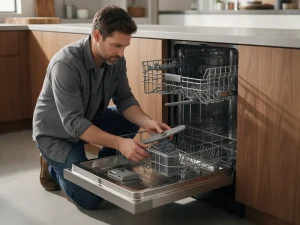
Plastic dries worse than glass or steel because it holds less heat. Drying relies on heat stored in the dishes themselves, which is why the material matters before the machine is blamed. If the lunch containers are the only wet things in the tub, you may not have a fault at all. If everything is damp, including mugs and plates, take it more seriously, and notice whether E14 is on screen.
What is known about E14
There is no confirmed universal meaning for E14 on Bertazzoni dishwashers. This page therefore gives you ways to improve drying and tells you when to stop experimenting.
Owner-fixable habits
- Check the rinse aid dispenser and refill it. An empty reservoir is the most common reason for water beads.
- Do not nest bowls or stack cups, because trapped water stays trapped.
- Angle plastics face-down so that they shed water, ideally on the top rack.
- After the cycle, crack the door open for a few minutes.
If the glasses look cloudy rather than spotted, the rinse aid may be set too high, or detergent residue is the issue. Cloudy glass and wet glass are two separate complaints, so it helps to know which one you see. Try less detergent in a soft-water kitchen and more in a hard-water one. A load that is wet only on the lower rack points more toward loading and water flow, while a load that is wet everywhere points toward the finishing stage.
Water temperature
If the dishwasher sits at the far end of a long pipe run from the heater, start the cycle after running the kitchen tap until it is hot. Cooler fill water makes it harder for the machine to finish dry.
When this is not a habits problem
If dishes are damp even after rinse aid and a hot fill, and E14 returns each time, the finishing stage deserves testing. A technician checks the heating circuit, the temperature sensing and, depending on the model, any vent or fan used for drying. Those checks are made inside the machine, so they are not an owner job.
The visit begins with diagnosis and a written estimate, and nothing is replaced without your approval.
Notes that save time at the visit
Write down which items stay wet, which rack they sit on, and what rinse aid and detergent you use. If you switched products recently, say so, since a new tablet can change drying more than any mechanical change would.
A phone photo of the wet load, taken before you towel anything off, tells a technician more than a long description does.
Frequently asked questions
Yes, to a degree. Plastic retains less heat, so a few damp pieces alone are not a fault.
Follow the dial or the owner guide for the exact model. Too much can cause streaks.
If it was caused by an overpacked rack, yes. If not, the code will likely come back.
Model compatibility: Bertazzoni reuses codes across series and model years, so E14 may mean something different on another appliance or generation. Confirm this against your model’s documentation and record your full model number before acting.